Transcrime at the 2025 ASC Conference
“Criminology, Law, and The Democratic Ideal”
12–15 November 2025 – Washington, D.C. – Marriott Marquis
This year’s American Society of Criminology conference reflects on how criminological research contributes to the reinforcement of the rule of law and democratic accountability. A shared ambition across all EU-funded projects and studies undertaken by Transcrime.
Across initiatives addressing corruption and its facilitators to safeguard democracy (e.g. FALCON, RESPOND, SECURE, ACOI), the protection of markets from criminal aims (e.g. DATACROS III, NEXT-IJ, KLEPTOTRACE, INVERT), and the prevention of phenomena that endanger fundamental rights, communities, and public safety (e.g. FERMI, PARTESS-COM, VANGUARD, TENACITY, EMERITUS), Transcrime’s approach turns research findings into guidance for decision-making and solutions to protect democratic values.
At ASC 2025, we will present case studies and research project analyses on the misuse of legal entities, money laundering, an analysis on victims and perpetrators of human trafficking, and the social ties driving criminal collaboration.
Full programme available here.
TRANSCRIME SPEAKING AGENDA:
WEDNESDAY, Nov 12
Vulnerabilities and Protective Factors of Victims and Perpetrators Involved in Trafficking in Human Beings (Author: Carlotta Carbone)
9:30 to 10:50am
Click to read the abstract
Trafficking in Human Beings (THB) remains an enduring and multifaceted problem with severe societal implications. While extensive research has explored victims’ experiences and vulnerabilities, significant gaps persist—particularly regarding protective factors that could help individuals avoid or exit trafficking. This study examines the vulnerabilities and protective factors affecting both victims and perpetrators of THB, focusing on three major forms—sex trafficking, labour trafficking, and forced criminality—within the European context. It combines a comprehensive literature review with insights from semi-structured interviews with THB experts, including law enforcement officials, border guards, researchers, NGO representatives, and other stakeholders. Preliminary findings challenge stereotypical portrayals of victims and perpetrators and highlight overlooked vulnerabilities in lesser-studied forms of trafficking. This study is conducted within the framework of the European-funded VANGUARD project (Grant Number 101121282).
Social Embeddedness, Multiplexity, and Criminal Collaboration within the Sinaloa Cartel (Authors: Valentin Pereda, David Décary-Hétu, Francesco Calderoni)
2:00 to 3:20pm
Click to read the abstract
This study investigates how social embeddedness shapes criminal collaboration within the Sinaloa Cartel, one of the largest drug-trafficking organisations globally. Drawing on trial transcripts from Joaquín “El Chapo” Guzmán Loera’s U.S. federal case, we coded multiplex social relationships—including familial ties, friendships, compadre relations, meetings, and collaborative transactions—into network data.
Using social network analysis and statistical models, we assess the extent to which these ties are associated with criminal collaboration. Findings reveal that friendship and meeting ties are the strongest predictors of collaboration, while familial ties lose their effect once shared organisational membership is controlled for. These results underscore the role of trust-based relationships in sustaining organised crime and demonstrate the methodological potential of judicial data for analysing criminal networks.
FRIDAY, Nov 14
Author Meets Critics: The Israeli Mafia. Cultural Journey into Israeli Organized Crime
2:00 to 3:20pm, Room TBA.
- Author: Dina Siegel
- Critics: Jay Albanese, Francesco Calderoni, Sheldon Zhang
SATURDAY, Nov 15
Money Laundering-as-a-Service: An Empirical Analysis on False Invoicing Providers (Author: Michele Riccardi)
8:00 to 9:20am
Click to read the abstract
False invoicing—the issuance of invoices for services that do not exist or whose value does not correspond to the actual transaction—is one of the most neglected crimes in criminological research, yet it plays a crucial role in modern organised and financial crime schemes. This paper provides an empirical analysis of several dozen cases of false invoicing detected in Italy, offering a sociological and criminological interpretation of why this offence is employed, by whom, and who provides these criminal services. Findings reveal the existence of specialised providers, including foreign individuals and organisations, offering money laundering-as-a-service through false invoicing. The study demonstrates how this practice has transformed both the structure of laundering markets and the dynamics of predicate crimes, including mafia-type operations. The analysis is conducted within the framework of the FALCON project.

Latest news
View all news
DATACROS III International Conference
12 November 2026 9.30 – 17:00 EET (8.30 – 16:00 CET) Bucharest and Online Like any modern enterprise, criminal organisations have proved highly responsive to emerging opportunities: exploiting technologies such as AI and crypto to reduce costs, scale operations and launder proceeds; targeting new markets,…
Governance transition at Transcrime, marked by continuity and international growth
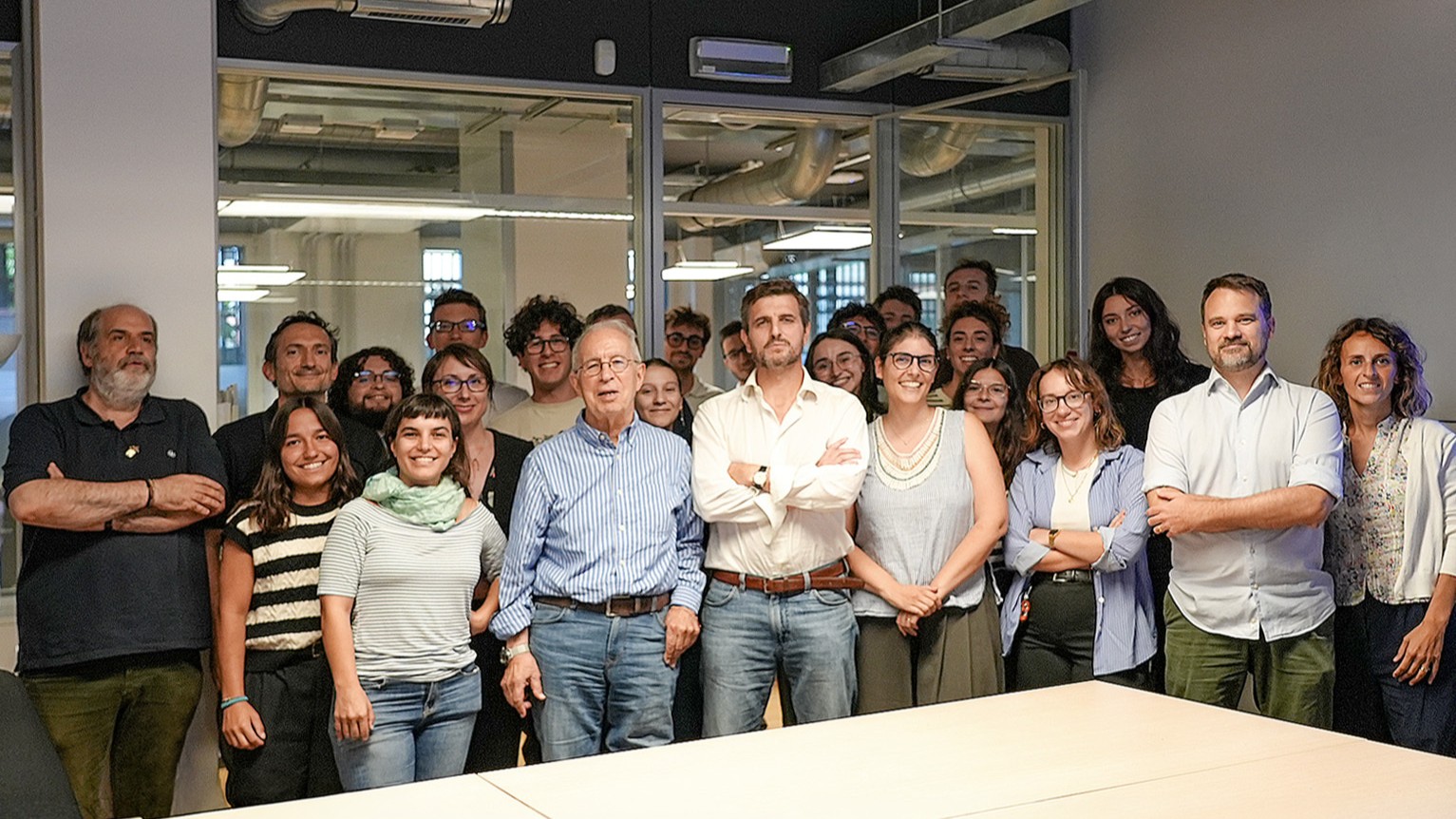
On Tuesday 22 September 2026, the Executive Board of Transcrime – Joint research centre on innovation and crime of Università Cattolica del Sacro Cuore, Alma Mater Studiorum University of Bologna and Università di Perugia – elected Prof. Michele Riccardi as the Centre’s new Director. The outgoing Director, Prof. Ernesto U.

#TranscrimeFiles | The new architecture of labour exploitation
Global supply chains and inadequate migration policies have created new vulnerabilities for the fastest-growing, yet least-studied driver of human trafficking: labor exploitation. Its new and complex architecture exploits layered networks of seemingly legitimate firms to evade scrutiny, presenting severe challenges to traditional law enforcement. Within the EU-funded projects VANGUARD…

Transcrime agenda at the XXVI ESC Annual Conference
Frontiers of Criminology 9-12 September 2026 – Warsaw, Poland At the Eurocrim 2026 Conference, Transcrime researchers will present more than twenty recent studies in which we investigated markets’ vulnerabilities to criminal infiltration, organised crime structures and modi operandi, and risks to…

#TranscrimeFiles | A case of EU funds fraud unmasked through the Risk Visioner tool
Watch how a real EU funds fraud, engineered to withstand scrutiny, was exposed through data-driven risk assessment, network analysis and AI screening modules run end-to-end within our tool Risk Visioner – developed by Transcrime and Crime&tech within the EU-funded project DATACROS III.

EJCPR ranked 9th worldwide in the field of criminology
The European Journal on Criminal Policy and Research (EJCPR) has been ranked 9th worldwide in the Criminology & Penology category of the latest Journal Citation Reports (JCR), one of the leading international rankings of academic journals. This places the EJCPR in the first quartile (Q1), recognising it among the…