Transcrime agenda at the 2026 ASC Annual Conference
Criminology and Justice Policy
18-21 November 2026 – Chicago, IL, USA
At the 81st Annual Meeting of the American Society of Criminology, Transcrime researchers will present recent studies on the vulnerabilities of legal economies and public institutions, how the presence of Italian mafias abroad has evolved over the past decades, and indicators to make corruption risk measurable, focusing on conflict of interest and undue influence conditions. We will also examine how anti-money laundering duties are applied in Italian municipalities, hidden routes of global waste trafficking, and everyday crimerisks in places of worship and around poorly managed commercial establishments. The studies also build on research projects funded by the EU, including DATACROS III and PARTESS-COM (read more about our projects here).
Visit the event official website. Full programme available here.
WHAT WE WILL PRESENT AT ASC 2026:
Dynamics of Italian Mafias Abroad: Geography, Activities, and Change, 2000–2022 (Author: Francesco Calderoni)
Nov. 19, 12:30-1:50pm
Click to read the abstract
This paper presents an updated systematic analysis of the presence of Italian mafias abroad from 2000 to 2022 using references extracted from official reports of Italian antimafia authorities. Building on earlier research, it examines how foreign mafia presence changes over time in terms of countries, mafia groups, and activities. The analysis compares the evolution of the ’Ndrangheta, Camorra, Cosa Nostra, and Apulian mafias across countries and activity types, including drug trafficking, fugitives and arrests, money laundering and legal-economy infiltration, stable presence, generic presence, and other illicit activities. Preliminary findings suggest that reported mafia presence remains geographically concentrated but evolves substantially in composition, with the ’Ndrangheta becoming increasingly prominent and economic activities gaining salience alongside drug trafficking. The paper emphasizes dynamic change rather than static distribution and explores whether observed growth reflects only longer and more detailed reporting or also substantive shifts in the international profile of Italian mafias. The study contributes to debates on organized crime mobility and the internationalization of mafia groups, while also reflecting critically on the strengths and limits of official law-enforcement sources.
Friday, 20 November
Does Place Management Matter? Absolute Presence, Contextual Moderation, and Crime-Type Specificity in Urban Commercial Environments (Authors: Marco Dugato, Iain Agar)
Nov. 20, 12:30-1:50pm
Click to read the abstract
Place management theory argues that commercial establishments vary in their capacity to influence criminal behaviour and crime opportunities, but large-scale empirical tests remain limited. This study uses Food Standards Agency (FSA) inspection ratings of different types of facilities across 4,988 English Lower Layer Super Output Areas as a proxy to test whether presence and concentration of poorly managed establishments is associated with higher crime. Mixed-effects negative binomial models, including both temporal and spatial lags, are estimated for violent crime, robbery, theft, and drug offences. Results show that the absolute presence of at least one poorly managed establishment is associated with significantly higher violent crime, robbery, and theft, while the relative share of poorly managed premises is not independently predictive. An analysis by type of establishment reveals that poorly managed restaurants are the most consistent predictor across crime types, with retailers and takeaways contributing specifically to theft only. Drug offences show no association with poor management across any model. The findings advance place management theory by empirically testing it on a large scale sample. Further it suggests the potential of regulatory inspection data as a crime prevention screening tool.
Beyond Extremism: Everyday Risks, Guardianship, and Situational Prevention in the Security of Places of Worship (Authors: Marco Dugato, Alessandro Corti)
Nov. 20, 12:30-1:50pm
Click to read the abstract
This study offers a criminological analysis of the security of places of worship beyond the dominant focus on hate crime and extremism. Drawing on environmental criminology, it conceptualises religious sites as settings where routine opportunity structures shape vulnerability to non-ideological offences such as theft and vandalism. The analysis is based on a large dataset of incidents identified through systematic monitoring of Italian media (2020–2025) and is complemented by insights from religious leaders, practitioners, and public authorities involved in a capacity-building workshop within the EU-funded PARTESS-COM project. The findings show that these incidents are typically opportunistic and facilitated by situational factors, including limited guardianship, unclear access control, and weak spatial demarcation. By applying situational crime prevention and routine activity theory, the paper highlights the potential of environmental and organisational interventions to reduce opportunities for offending. The results support the development of more comprehensive and balanced approaches to the security of places of worship, adopting everyday risk prevention strategies.
Mapping the Grey Area: Emerging Corruption Risks in the EU (Authors: Phillip Screen, Michele Riccardi, Gabriele Pironato, Serena Favarin)
Nov. 20, 3:30-4:50pm
Click to read the abstract
This study advances a risk-based approach to corruption by focusing on structural conditions that precede illegal conduct. It develops and applies novel indicators to capture two underexplored dimensions of corruption risk: conflict of interest and undue influence. Conflict of interest is defined as the overlap between political roles and private economic activity, operationalised through firm-level links to politically exposed persons. Undue influence is conceptualised as the potential for foreign ownership and control (particularly from high-risk jurisdictions) to shape decision-making through economic leverage. Using large-scale corporate ownership data from Orbis and risk-intelligence datasets, the study maps these risks across European Union Member States, disaggregating results by sector (NACE) and territory (NUTS regions). Preliminary findings highlight the concentration of politically connected firms in regulated and strategic sectors, as well as spatial clustering linked to economic and administrative structures. By moving beyond legality-based definitions, the study provides a framework for identifying corruption risks in their early, lawful stages. The resulting indicators are designed for integration into policy tools, including dashboards supporting EU Rule of Law monitoring, and offer a scalable approach to preventive anti-corruption analysis.
Saturday, 21 November
Reconstructing the Global Waste Trafficking Network: A Weighted Approach (Authors: Serena Favarin, Caterina Gavioli)
Nov. 21, 11:00am-12:20pm
Click to read the abstract
Waste trafficking is an increasingly relevant form of transnational environmental crime, yet the global patterns through which illegal waste moves between countries remain insufficiently understood. Existing studies have relied on binary representations of global waste trafficking networks, which capture whether countries are connected through illegal waste flows but overlook the magnitude of these exchanges. Building on this limitation, this study asks: How does the structure of the global waste trafficking network change when considering not only the presence of connections between countries, but also their frequency and the volume of waste exchanged? Drawing on data from the Basel Convention National Reports (2016–2024), we develop three network representations: a binary network, a frequency-weighted network, and a composite weighted network combining adjusted frequency and volume. To address reporting imbalances, we introduce an Adjustment Reporting Score (ARS), applied at the case level. The analysis shows that incorporating weights provides a more differentiated representation of the network, highlighting variations in the relative importance of routes and countries not visible in binary representations. This study contributes by advancing network analysis in environmental crime research and by showing how incorporating flow intensity can reveal structural patterns of waste trafficking that remain hidden.

Latest news
View all news
Football: opaque club ownership is more likely associated to higher financial and criminal risks
Who are the ultimate owners of Italian football clubs? Where does the money invested in these clubs come from? And what risks lie behind investment funds, fiduciary companies and transnational corporate structures that make it difficult to identify the individuals who ultimately control them? These questions are addressed by a…
DATACROS III International Conference
12 November 2026 9.30 – 17:00 EET (8.30 – 16:00 CET) Bucharest and Online Like any modern enterprise, criminal organisations have proved highly responsive to emerging opportunities: exploiting technologies such as AI and crypto to reduce costs, scale operations and launder proceeds; targeting new markets,…
Governance transition at Transcrime, marked by continuity and international growth
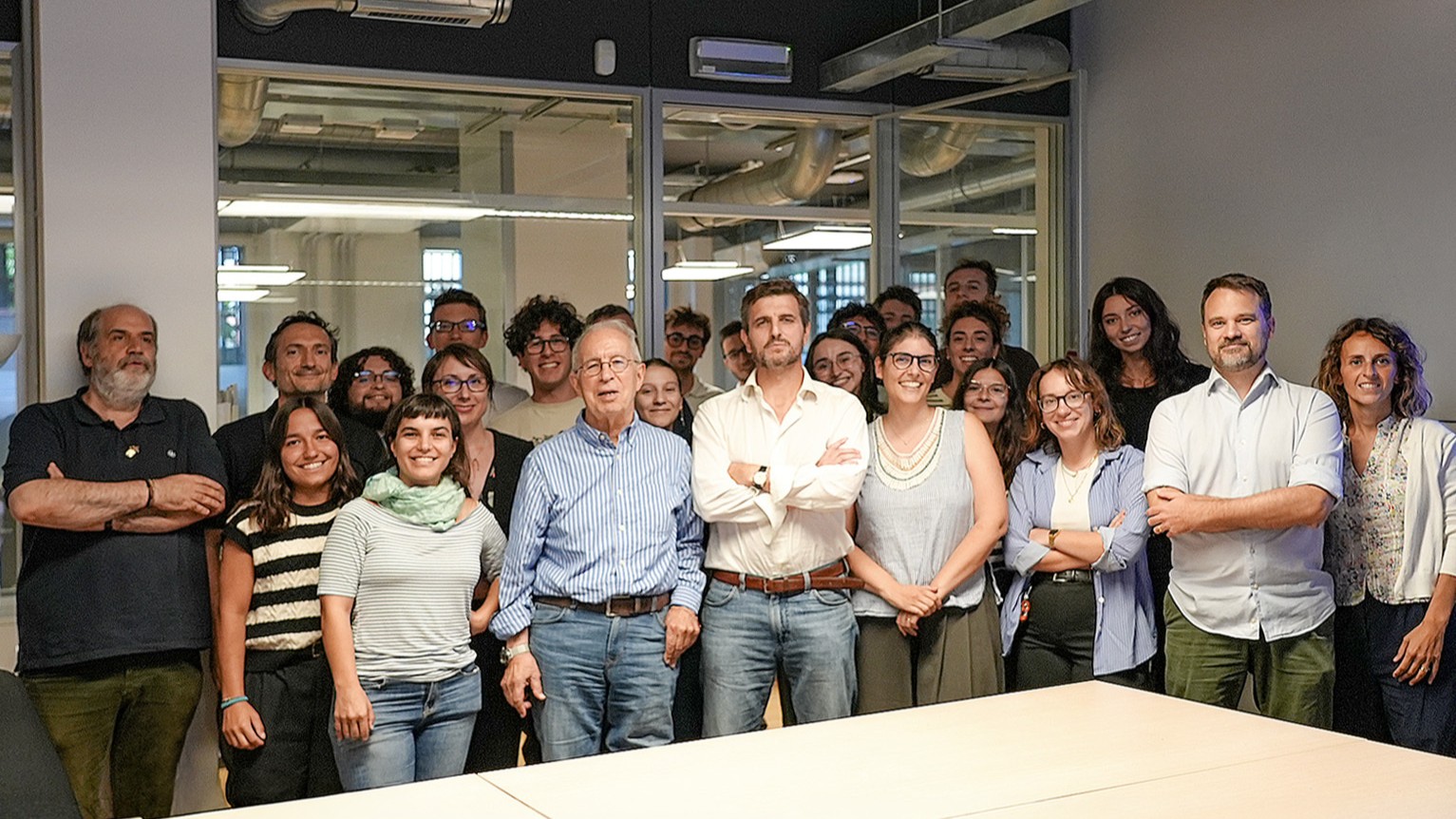
On Tuesday 22 September 2026, the Executive Board of Transcrime – Joint research centre on innovation and crime of Università Cattolica del Sacro Cuore, Alma Mater Studiorum University of Bologna and Università di Perugia – elected Prof. Michele Riccardi as the Centre’s new Director. The outgoing Director, Prof. Ernesto U.

#TranscrimeFiles | The new architecture of labour exploitation
Global supply chains and inadequate migration policies have created new vulnerabilities for the fastest-growing, yet least-studied driver of human trafficking: labor exploitation. Its new and complex architecture exploits layered networks of seemingly legitimate firms to evade scrutiny, presenting severe challenges to traditional law enforcement. Within the EU-funded projects VANGUARD…

Transcrime agenda at the XXVI ESC Annual Conference
Frontiers of Criminology 9-12 September 2026 – Warsaw, Poland At the Eurocrim 2026 Conference, Transcrime researchers will present more than twenty recent studies in which we investigated markets’ vulnerabilities to criminal infiltration, organised crime structures and modi operandi, and risks to…

#TranscrimeFiles | A case of EU funds fraud unmasked through the Risk Visioner tool
Watch how a real EU funds fraud, engineered to withstand scrutiny, was exposed through data-driven risk assessment, network analysis and AI screening modules run end-to-end within our tool Risk Visioner – developed by Transcrime and Crime&tech within the EU-funded project DATACROS III.