Second NEXT-IJ Investigathon: data and AI for investigative journalism
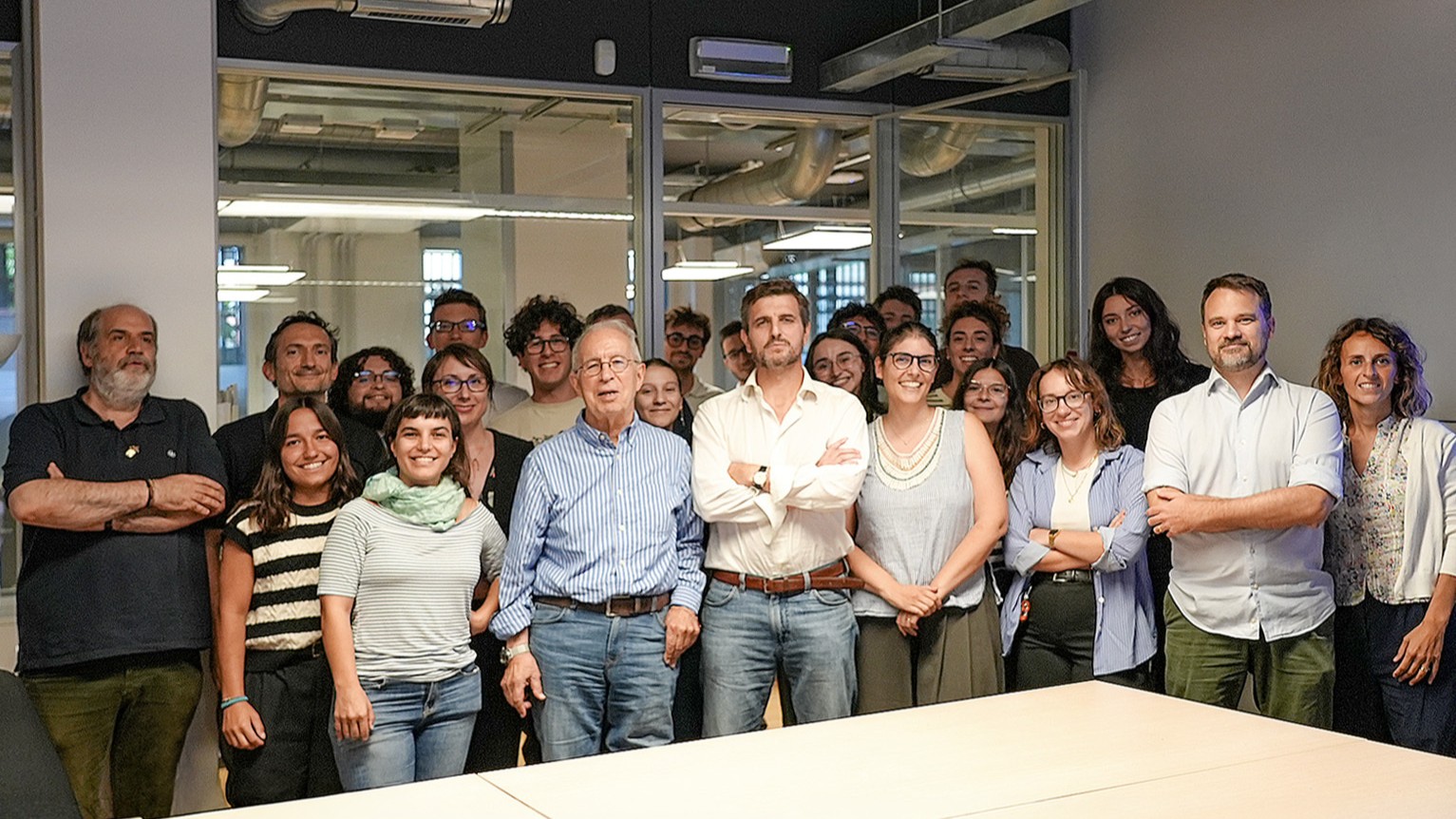
From 11 to 13 November 2026, a classroom at Università Cattolica del Sacro Cuore in Milan became a newsroom for 30 investigative journalists from 18 European countries, joined by students from the University’s School of Journalism. The occasion was the second Investigathon of NEXT-IJ, an EU-funded project in which Transcrime and the School of Journalism of the University are partners alongside the Organized Crime and Corruption Reporting Project (OCCRP) and the Global Forum for Media Development (GFMD).
Complex ownership structures have become criminals’ first line of defence against scrutiny, layering companies and opaque legal arrangements across continents in ways that make it hard to establish who stands behind them. The data that could reveal this is held in systems that are neither easy to access nor built to communicate with each other.
NEXT-IJ aims to respond to these challenges with an orchestrated toolkit that helps journalists access and connect global data sources, run them through AI-powered analytics, quickly spot warning signs of corruption, organised and financial crime, and gather evidence. The Investigathon closes a two-year programme in which more than 240 journalists went through the project’s trainings to learn how to make the best use of this toolkit.
In Milan, participants refreshed their command of the toolkit and applied it in teams to briefs and datasets prepared by OCCRP, investigating the money behind Europe’s data centre boom and a major leak from Curaçao’s gambling regulator. They mapped corporate networks, identified beneficial owners, used AI to screen open sources and ranked entities by risk, tracing links to high-risk individuals and jurisdictions among the companies involved.
Participants worked through investigative workflows combining complementary tools, among them OCCRP’s Aleph Pro and DATACROS, developed by Transcrime and its spin-off Crime&tech and already used by journalists, public authorities and law enforcement agencies across Europe. In Next-IJ, DATACROS was employed to let journalists connect more than 20 global data sources – including company data, public procurement and real estate records, sanctions lists, politically exposed persons, adverse media and leaks – and apply AI-based risk indicators and functions, built on Transcrime’s research and developed in the context of NEXT-IJ, to flag anomalies and score each entity’s risk of involvement in financial or organised crime schemes.
“The tool’s features gave us a single view across key data sources, making it far less likely we’d miss a promising lead,” said Luigi Scarano, freelance journalist and contributor to Italian investigative TV programme Report. For Andrea Carcuro, managing editor of Scomodo, “it was key to piecing together, in very little time, how the entities we were investigating were connected.”
“Most of Europe’s criminal networks rely on legitimate firms as a front, yet newsrooms often lack the tools to connect data sources across the globe, including registers, corporate data providers, real estate information, news and open sources,” said Michele Riccardi, Director of Transcrime. “As part of the NEXT-IJ toolkit, we provided journalists access to a DATACROS interface which helped them to gather and standardise information from all these sources. In Milan we saw how, in the hands of skilled reporters, this toolkit can set real investigations in motion in just a few days.”
The most promising leads will now be considered for OCCRP’s collaborative investigations.
NEXT-IJ is co-funded by the European Union.

Latest news
View all news
Transcrime agenda at the 2026 ASC Annual Conference
Criminology and Justice Policy 18-21 November 2026 – Chicago, IL, USA At the 81st Annual Meeting of the American Society of Criminology, Transcrime researchers will present recent studies on the vulnerabilities of legal economies and public institutions, how the presence of…

Football: opaque club ownership is more likely associated to higher financial and criminal risks
Who are the ultimate owners of Italian football clubs? Where does the money invested in these clubs come from? And what risks lie behind investment funds, fiduciary companies and transnational corporate structures that make it difficult to identify the individuals who ultimately control them? These questions are addressed by a…

DATACROS III International Conference
12 November 2026 9.30 – 17:00 EET (8.30 – 16:00 CET) Bucharest and Online Like any modern enterprise, criminal organisations have proved highly responsive to emerging opportunities: exploiting technologies such as AI and crypto to reduce costs, scale operations and launder proceeds; targeting new markets,…
Governance transition at Transcrime, marked by continuity and international growth
On Tuesday 22 September 2026, the Executive Board of Transcrime – Joint research centre on innovation and crime of Università Cattolica del Sacro Cuore, Alma Mater Studiorum University of Bologna and Università di Perugia – elected Prof. Michele Riccardi as the Centre’s new Director. The outgoing Director, Prof. Ernesto U.

#TranscrimeFiles | The new architecture of labour exploitation
Global supply chains and inadequate migration policies have created new vulnerabilities for the fastest-growing, yet least-studied driver of human trafficking: labor exploitation. Its new and complex architecture exploits layered networks of seemingly legitimate firms to evade scrutiny, presenting severe challenges to traditional law enforcement. Within the EU-funded projects VANGUARD…

Transcrime agenda at the XXVI ESC Annual Conference
Frontiers of Criminology 9-12 September 2026 – Warsaw, Poland At the Eurocrim 2026 Conference, Transcrime researchers will present more than twenty recent studies in which we investigated markets’ vulnerabilities to criminal infiltration, organised crime structures and modi operandi, and risks to…