Governance transition at Transcrime, marked by continuity and international growth
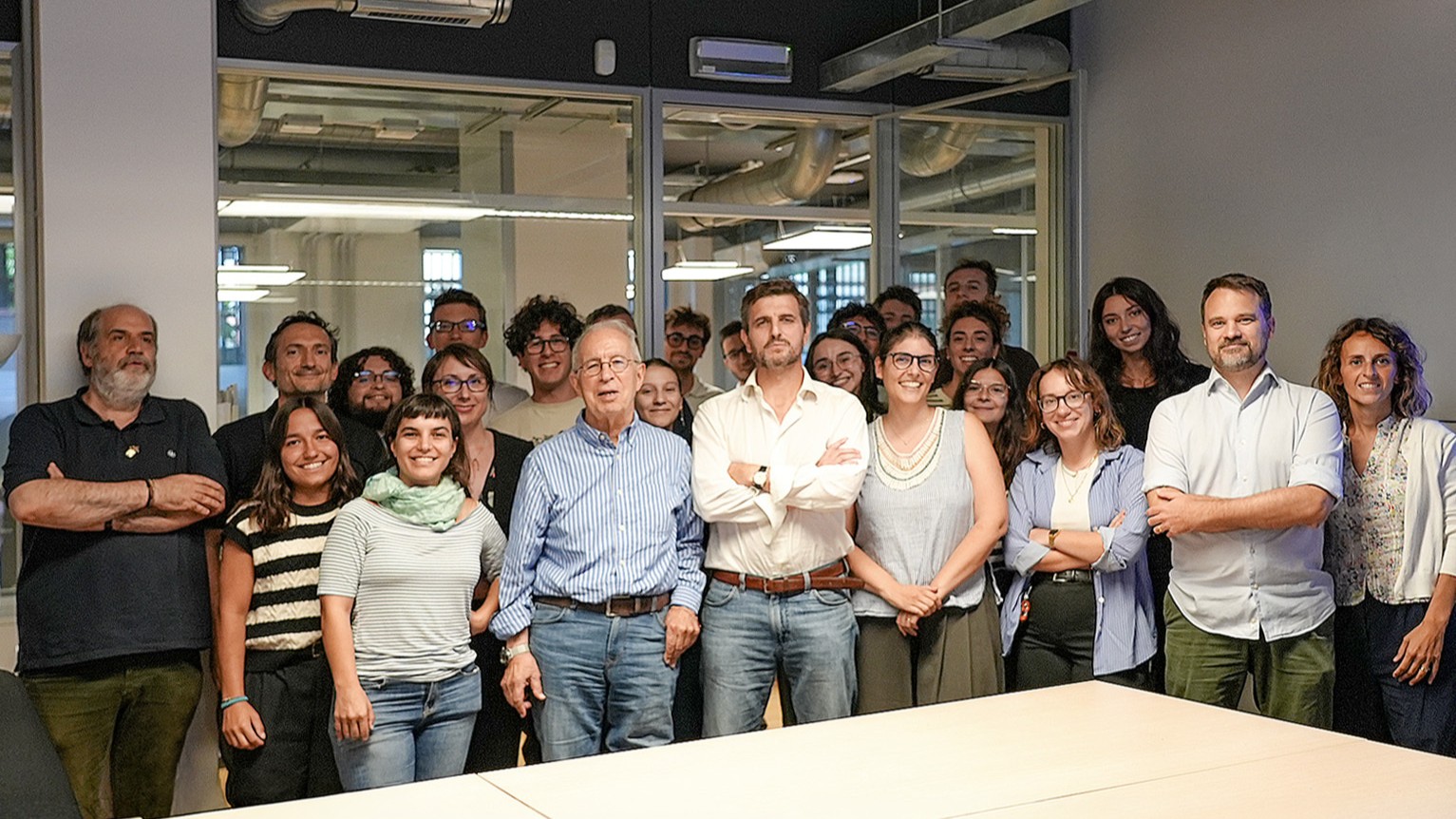
On Tuesday 22 September 2026, the Executive Board of Transcrime – Joint research centre on innovation and crime of Università Cattolica del Sacro Cuore, Alma Mater Studiorum University of Bologna and Università di Perugia – elected Prof. Michele Riccardi as the Centre’s new Director. The outgoing Director, Prof. Ernesto U. Savona, who founded Transcrime in 1994, will chair the new Scientific Council. The appointments were ratified on XX September by decree of the Rector Elena Beccalli.
Associate Professor of Criminology at Università Cattolica, Michele Riccardi has served as Deputy Director of Transcrime since 2020, having joined the Centre as a full-time researcher in 2012. He coordinates and has coordinated several international research projects, and is also a member, among others, of the Academic Advisory Board of Europol’s SOCTA and of expert groups of the European Commission and the United Nations.
His appointment is the latest step in a broader process of transition and renewal of Transcrime’s governance, launched in recent years, which has already seen the new Executive Board take office in April and the establishment of a Scientific Council.
In addition to the Director Michele Riccardi, the Executive Board involves Professors Francesco Calderoni, Marco Dugato, Serena Favarin, Rosangela Lodigiani and Mario A. Maggioni for Università Cattolica del Sacro Cuore; Anna Sergi, Raffaella Sette and Sandra Sicurella for Alma Mater Studiorum University of Bologna; Enrico Carloni, Sabina Curti and Silvia Fornari for Università di Perugia.
The new Scientific Council, established to support the continuity and scientific quality of the Centre’s activities, is chaired by the outgoing Director Prof. Ernesto U. Savona. Its members include leading international scholars in criminology and the social sciences; among them, Prof. Wim Huisman (Vrije Universiteit Amsterdam, the Netherlands), President-Elect of the European Society of Criminology (ESC); Prof. Letizia Paoli (Katholieke Universiteit Leuven, Belgium), current President of the ESC; Prof. Ineke Marshall (Northeastern University, United States); Dr. Adrian Barrios (INEGI, Mexico); and Dr. Natalia Ollus (HEUNI – European Institute for Crime Prevention and Control, affiliated with the United Nations).
A phase of international growth and consolidation
This transition is the outcome of sustained expansion that has made Transcrime the leading research centre in its field in Italy and one of the most prominent in Europe and worldwide in the study of organised and financial crime, illegal markets and their evolution. Since 2020, this growth has resulted in:
- An expansion of the staff, which now counts more than 40 researchers and collaborators with multidisciplinary expertise, ranging from criminology, economics, law and finance to data science.
- A substantial scientific production, with over 110 publications in the last five years alone, including peer-reviewed articles in international journals and policy-oriented reports.
- Over 40 research projects since 2020, funded, among others, by the European Commission, the United Nations, the Inter-American Development Bank and other national and international authorities and public bodies.
- The training of more than 1,200 students across several programmes at Università Cattolica supported by Transcrime, including the ‘Crime & Security Analysis‘ curriculum of the Master’s Degree in Public Policy, the Bachelor’s Degree in Sociology, English-taught BSc curriculum ‘Criminology‘. Also, more than 20 PhDs in criminology have been awarded, 10 of whom are now professors and researchers at universities in Italy and abroad.
This growth has also extended to the other initiatives that have developed around the Centre. The European Journal on Criminal Policy and Research, published by Springer and edited since 2003 by Prof. Ernesto U. Savona, has seen its Impact Factor rise by more than 50% (from 1.8 to 2.8), reaching 9th place worldwide in the Criminology & Penology category of the Journal Citation Reports in 2026.
At the same time, Crime&tech, the spin-off company of Università Cattolica-Transcrime, has become one of the leading players in Italy and Europe in the development and delivery of technology solutions for financial investigations, anti-money laundering and third-party risk assessment (e.g. suppliers, customers), with the following results:
- Development of three new multi-source solutions and AI-based services.
- Adoption of these technological solutions and services by police forces and authorities in Italy and several European countries.
- Adoption by large private groups in the financial and banking, manufacturing, transport and logistics, luxury and retail sectors.
- Constant increase in revenue and customers, with turnover more than quadrupled over the last five years.
Three pillars, one mission
The results achieved in recent years are the product of the collective work of Transcrime’s researchers and staff and of the cultivation of three dimensions that have characterised the Centre’s work since its foundation:
“Scientific excellence, research applied to public policy and technological innovation” says the new Director Michele Riccardi. “Transcrime, is one of the few examples at an international level – if not the only one in criminology – where these three dimensions coexist successfully. This is the result of a shared vision and the daily efforts of all our researchers, as well as of the support of the universities backing the Centre, starting with Università Cattolica.”
“This change in governance concludes a process that has been developed over the years” says Ernesto Savona, outgoing Director and Chair of the Scientific Council. “The Scientific Council will strengthen Transcrime’s connections with the European and international research communities, and improve its ability to identify the needs of public authorities and other stakeholders in the public and private sectors. This will reinforce the applied nature and social value of our research.”

The future research and development agenda
“We have always studied the transformations of crime and we will continue to do so,” the new Director Riccardi continues. “In particular, we will focus on three areas: the use of new technologies, first of all artificial intelligence, both for criminal purposes and in prevention strategies; the growing digital and financial dimension of organised crime and illegal markets; and the evolution of different forms of deviance, with particular attention to juvenile delinquency and its connections with digital platforms and online communities.”
The governance transition will consolidate the trajectory set out over more than three decades of research and innovation, ensuring that the languages, tools and analytical methods used to study new forms of crime continue to evolve over time.
Latest news
View all news
#TranscrimeFiles | The new architecture of labour exploitation
Global supply chains and inadequate migration policies have created new vulnerabilities for the fastest-growing, yet least-studied driver of human trafficking: labor exploitation. Its new and complex architecture exploits layered networks of seemingly legitimate firms to evade scrutiny, presenting severe challenges to traditional law enforcement. Within the EU-funded projects VANGUARD…

Transcrime agenda at the XXVI ESC Annual Conference
Frontiers of Criminology 9-12 September 2026 – Warsaw, Poland At the Eurocrim 2026 Conference, Transcrime researchers will present more than twenty recent studies in which we investigated markets’ vulnerabilities to criminal infiltration, organised crime structures and modi operandi, and risks to…

#TranscrimeFiles | A case of EU funds fraud unmasked through the Risk Visioner tool
Watch how a real EU funds fraud, engineered to withstand scrutiny, was exposed through data-driven risk assessment, network analysis and AI screening modules run end-to-end within our tool Risk Visioner – developed by Transcrime and Crime&tech within the EU-funded project DATACROS III.

EJCPR ranked 9th worldwide in the field of criminology
The European Journal on Criminal Policy and Research (EJCPR) has been ranked 9th worldwide in the Criminology & Penology category of the latest Journal Citation Reports (JCR), one of the leading international rankings of academic journals. This places the EJCPR in the first quartile (Q1), recognising it among the…

Inside the Corruption Maze: Data-led Strategies to Investigate Corruption
Training session under the EU co-funded project SECURE 18 June 2026 | h. 10:00 – 14:00 CEST Online, via Webex Public authorities, law enforcement agencies and journalists face a paradox: while data is more abundant than ever, information fragmentation and saturation are capitalized upon by…

Integrity & Due Diligence – 3rd DATACROS III Training
“Identifying criminal red flags in AML Due Diligence for high-risk customers and supply chains” 24 June 2026 | 9:45 – 13:00 CEST Online, via Webex Criminal organisations are becoming highly adaptive economic actors, capable of embedding themselves into legitimate markets, supply chains, financial flows and service…