Crime and Money Laundering
WEBINAR SERIES
What is going on beneath the surface of the global financial system? According to the International Monetary Fund (2019), up to 37% of international transactions may be linked to illicit activities. Tackling this hidden economy requires operational insights and tools capable of navigating between legitimate activities and those that are merely disguised as such.
The Georgetown Americas Institute and Transcrime – Università Cattolica del Sacro Cuore invite you to a three-part virtual seminar series that unpacks the strategies, structures, and solutions driving the fight against financial crime.
Session 1 – Rethinking Regulation and Transparency
Date: 14 January 2025
Time: 12:00 p.m. – 1:00 p.m. EST
Speakers:
- Elisa de Anda, President, Financial Action Task Force
- Roberto de Michele, former Head of the institutional capacity of the state division of the institutions for development sector, Inter-American Development Bank
The first seminar will provide in-depth discussion on the evolving international regulatory landscape and the transformative role of technology in detecting and preventing illicit transactions. We will explore pivotal initiatives aimed at enhancing corporate ownership transparency as a fundamental step in dismantling the infrastructure of financial crime.
Session 2 – Are We All Criminals?
Date: 21 January 2025
Time: 12:00 p.m. – 1:00 p.m. EST
Speakers:
- Michele Riccardi, Deputy Director, Transcrime – Università Cattolica del Sacro Cuore
- Marcela Melendez Arjona, Deputy Chief Economist, Latin America and the Caribbean, The World Bank
Given the tight knot between the licit and the illicit economy, the second seminar will discuss how to distinguish money laundering by criminal and non-criminal organisations and how to adopt appropriate policy responses. Are we all criminals? Are the strategies for laundering different when carried out by legitimate businesses or by criminal organisations?
Session 3 – Measuring Impact
Date: 28 January 2025
Time: 12:00 p.m. – 1:00 p.m. EST
Speakers:
- Joras Ferwerda, Associate Professor, Utrecht University School of Economics
- Sean Hagan, Nonresident senior fellow, Peterson Institute for International Economics| Professor, Georgetown University Law School
The final session will focus on measuring the impact of criminal activity and money laundering. We will discuss different methodologies for measuring the extent of illicit financial activity, including cross-border illicit financial transactions. Which indicators can help us detect illicit transactions? How does money laundering impact on the governance and credit scoring of jurisdictions?
Register here.

Latest news
View all news
DATACROS III International Conference
12 November 2026 9.30 – 17:00 EET (8.30 – 16:00 CET) Bucharest and Online Like any modern enterprise, criminal organisations have proved highly responsive to emerging opportunities: exploiting technologies such as AI and crypto to reduce costs, scale operations and launder proceeds; targeting new markets,…
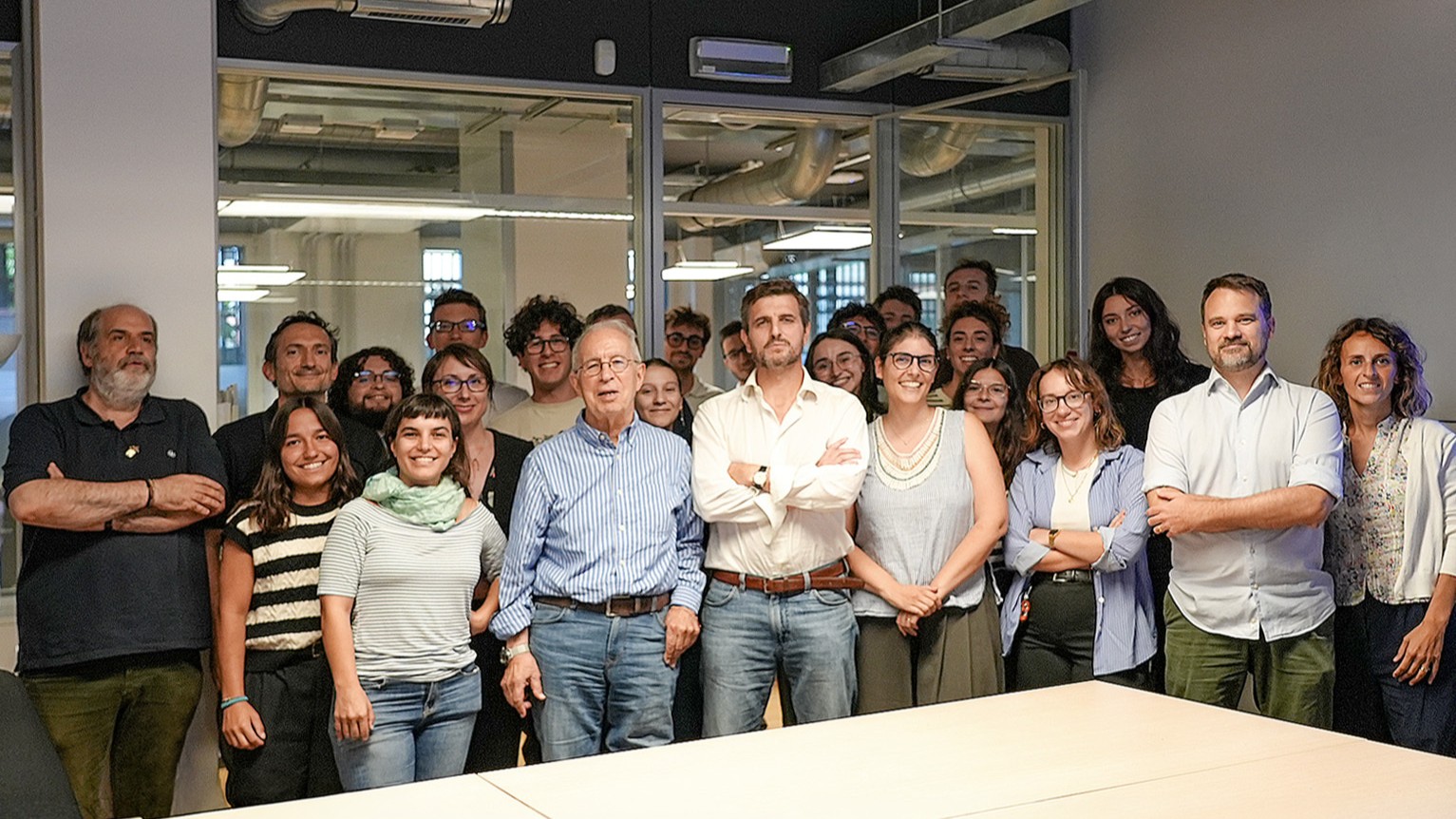
Governance transition at Transcrime, marked by continuity and international growth
On Tuesday 22 September 2026, the Executive Board of Transcrime – Joint research centre on innovation and crime of Università Cattolica del Sacro Cuore, Alma Mater Studiorum University of Bologna and Università di Perugia – elected Prof. Michele Riccardi as the Centre’s new Director. The outgoing Director, Prof. Ernesto U.

#TranscrimeFiles | The new architecture of labour exploitation
Global supply chains and inadequate migration policies have created new vulnerabilities for the fastest-growing, yet least-studied driver of human trafficking: labor exploitation. Its new and complex architecture exploits layered networks of seemingly legitimate firms to evade scrutiny, presenting severe challenges to traditional law enforcement. Within the EU-funded projects VANGUARD…

Transcrime agenda at the XXVI ESC Annual Conference
Frontiers of Criminology 9-12 September 2026 – Warsaw, Poland At the Eurocrim 2026 Conference, Transcrime researchers will present more than twenty recent studies in which we investigated markets’ vulnerabilities to criminal infiltration, organised crime structures and modi operandi, and risks to…

#TranscrimeFiles | A case of EU funds fraud unmasked through the Risk Visioner tool
Watch how a real EU funds fraud, engineered to withstand scrutiny, was exposed through data-driven risk assessment, network analysis and AI screening modules run end-to-end within our tool Risk Visioner – developed by Transcrime and Crime&tech within the EU-funded project DATACROS III.

EJCPR ranked 9th worldwide in the field of criminology
The European Journal on Criminal Policy and Research (EJCPR) has been ranked 9th worldwide in the Criminology & Penology category of the latest Journal Citation Reports (JCR), one of the leading international rankings of academic journals. This places the EJCPR in the first quartile (Q1), recognising it among the…