Persistent Sanctions Evasion: Increasingly Transnational Schemes Often Involving Unwitting Companies
KLEPTOTRACE Final Conference – Press Release
Authorities from 27 European countries met at Europol HQ to discuss the results of KLEPTOTRACE, an EU co-funded project coordinated by Transcrime-Università Cattolica
The Hague, 10 April 2025 – Sophisticated evasion schemes, weak compliance protocols, and jurisdictional loopholes keep eroding the effectiveness of European Union sanctions – and international ones – including those targeting Russian oligarchs as a consequence of the invasion of Ukraine.
Today, the first systematic research on sanction evasion schemes was presented at Europol Headquarters at The Hague (the Netherlands), during the final conference of the EU co-funded KLEPTOTRACE project. The event, organised by Transcrime – Joint Research Centre on Innovation and Crime of the Università Cattolica del Sacro Cuore – with the support of Europol, brought together law enforcement agencies, financial intelligence units, asset recovery offices, anti-corruption and competition authorities from 27 European countries, to discuss the state of play in sanctions enforcement and present data-driven tools and recommendations for investigating cases of sanction violation and high-level corruption.
Sanctions have become a key foreign policy instrument for the EU to safeguard democracy and human rights, and have been widely employed to target the supporters of the Russian invasion of Ukraine; however, violations are frequent despite new European rules which entered into force in 2024 to harmonise criminal offences and penalties for the violation of restrictive measures.
The KLEPTOTRACE project has produced the first systematic mapping of corporate assets linked to sanctioned ‘oligarchs’, the first comprehensive analysis of recurrent sanction evasion schemes and an in-depth study of transnational ‘kleptocracy’ schemes. The findings underline the need to improve asset tracing and the international cooperation to enforce sanctions.
Mapping of companies linked to sanctioned ‘oligarchs’
KLEPTOTRACE has mapped the companies in the EU that on 31 December 2021, just before the Russian invasion of Ukraine, belonged to the 342 individuals and entities that were then targeted by sanctions and restrictive measures (within the EU sanctions list or the US OFAC list):
- More than 9,866 companies in Europe have sanctioned entities as owners, beneficial owners and directors.
- The countries with the highest number of companies are Ukraine (1,664), the UK (1,197), Germany (827) and Cyprus (817).
- Their presence is prevalent in the financial services, wholesale trade, and real estate sectors.
- These companies are often controlled through complex corporate networks involving third jurisdictions and offshore countries. Among the most frequent: Russia (54% links), Bosnia and Herzegovina (19%), Cyprus (17%).
Tracing and understanding sanction evasion schemes
Transcrime study of nearly 100 cases of sanctions evasion reveals widespread employment of sophisticated transnational schemes:
- On average, each violation scheme involves 7 legal entities, a third of which are shell companies.
- Financial institutions are often implicated through their branches, highlighting the need to extend responsibilities beyond headquarters.
- On average, each case involves 3 facilitators or figureheads, operating across borders to exploit divergences in legal systems, a trend also highlighted in the Europol’s SOCTA report 2025.
- Traditional methods for illicit transactions remain prevalent, such as bank transactions (35.1% of cases), wire transfers (17.5%), and offshore accounts (12.4%). The use of cryptocurrencies appears still limited (3.1%).
- Non-monetary transactions, including real estate acquisitions, luxury goods, and asset transfers, are significant (22.2%) in targeted sanctions violations.
- Sectoral sanctions (i.e. targeting entire industries) account for over 80% of violations due to their broader nature.
- As a result, legitimate companies are often inadvertently involved in violation cases (3.5 on average). This is due to inadequate compliance protocols or lack of regulatory literacy, underscoring the need to provide targeted training for companies.
- The most at-risk sectors are electronics and hi-tech components (27.8% of violations), mechanical systems and aircraft components (20.3%), and other military or dual-use products (21.5%).
Analysis of high-level corruption and ‘kleptocracy’ schemes
The project also produced an analysis of high-level corruption tactics employed by ‘kleptocrats’ to transfer and launder bribery funds:
- The schemes are highly transnational, with an average of 5 countries worldwide involved in each case.
- Even when the act occurs outside their borders, EU Member States are involved in half of these cases, either as satellite jurisdictions (30%) or for the nationality or residence of perpetrators (31%).
- The most common satellite jurisdictions in the cases analysed are the US, Cyprus, the British Virgin Islands, Switzerland and the UK. Geographical and cultural proximity are key factors in the choice of satellite jurisdiction.
The research insights produced by KLEPTOTRACE enabled the development of an advanced tool for investigating high-risk entities and tracing illicit assets, which is now available to interested EU competent authorities for tracing criminal assets and sanction evasion schemes.
“KLEPTOTRACE’s analysis into regional patterns, actors and schemes of sanctions evasion provided the basis for a more efficient, risk-based approach to enforcement” said Prof. Ernesto Savona, Director of Transcrime. “We have translated this data into measurable risk indicators and actionable tools capable of unravelling these layers of complexity, to the advantage of both cross-border investigations and corporate due diligence”.
During the event, KLEPTOTRACE partner University of Luxembourg presented an assessment of existing anti-corruption sanction frameworks and suggested recommendations for a potential new regime, following the proposal from the European Commission and the High Representative for Foreign Affairs and Security Policy in May 2023.

Latest news
View all news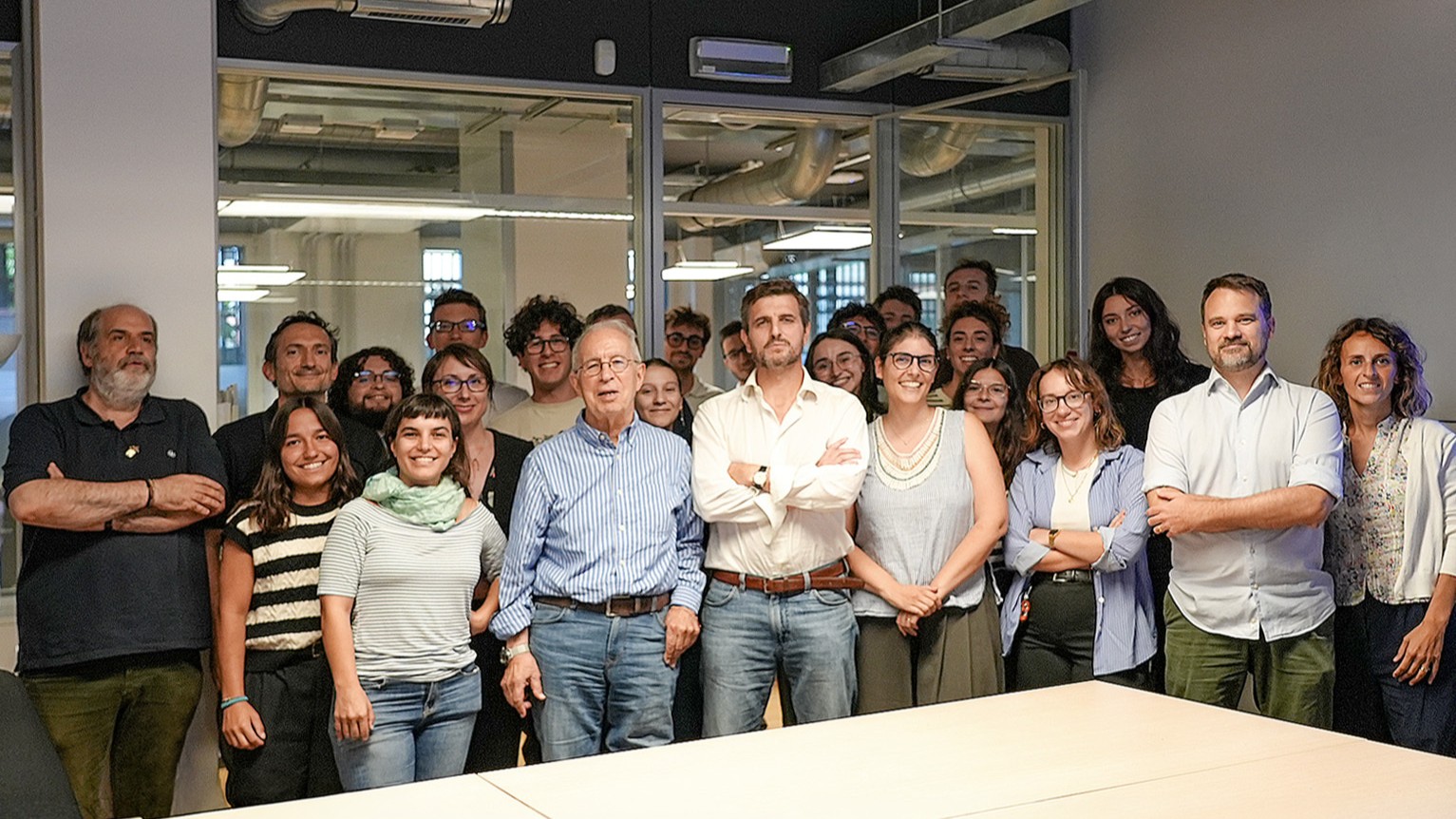
Governance transition at Transcrime, marked by continuity and international growth
On Tuesday 22 September 2026, the Executive Board of Transcrime – Joint research centre on innovation and crime of Università Cattolica del Sacro Cuore, Alma Mater Studiorum University of Bologna and Università di Perugia – elected Prof. Michele Riccardi as the Centre’s new Director. The outgoing Director, Prof. Ernesto U.

#TranscrimeFiles | The new architecture of labour exploitation
Global supply chains and inadequate migration policies have created new vulnerabilities for the fastest-growing, yet least-studied driver of human trafficking: labor exploitation. Its new and complex architecture exploits layered networks of seemingly legitimate firms to evade scrutiny, presenting severe challenges to traditional law enforcement. Within the EU-funded projects VANGUARD…

Transcrime agenda at the XXVI ESC Annual Conference
Frontiers of Criminology 9-12 September 2026 – Warsaw, Poland At the Eurocrim 2026 Conference, Transcrime researchers will present more than twenty recent studies in which we investigated markets’ vulnerabilities to criminal infiltration, organised crime structures and modi operandi, and risks to…

#TranscrimeFiles | A case of EU funds fraud unmasked through the Risk Visioner tool
Watch how a real EU funds fraud, engineered to withstand scrutiny, was exposed through data-driven risk assessment, network analysis and AI screening modules run end-to-end within our tool Risk Visioner – developed by Transcrime and Crime&tech within the EU-funded project DATACROS III.

EJCPR ranked 9th worldwide in the field of criminology
The European Journal on Criminal Policy and Research (EJCPR) has been ranked 9th worldwide in the Criminology & Penology category of the latest Journal Citation Reports (JCR), one of the leading international rankings of academic journals. This places the EJCPR in the first quartile (Q1), recognising it among the…

Inside the Corruption Maze: Data-led Strategies to Investigate Corruption
Training session under the EU co-funded project SECURE 18 June 2026 | h. 10:00 – 14:00 CEST Online, via Webex Public authorities, law enforcement agencies and journalists face a paradox: while data is more abundant than ever, information fragmentation and saturation are capitalized upon by…