High-Level Corruption: An Analysis of Schemes, Costs and Policy Recommendations
The FALCON project has published a comprehensive policy brief that examines corruption schemes and societal impact, and provides policy recommendations to enhance anti-corruption efforts across Europe.
Corruption, defined broadly as the misuse of public office for private gain, undermines civil, political, and economic rights, erodes trust in institutions and hinders economic progress. The FALCON Innovation Action, funded by the European Union under the Horizon Europe framework programme, has produced a policy brief titled “High-Level Corruption: An Analysis of Schemes, Costs and Policy Recommendations“. The report was carried out by Transcrime, Government Transparency Institute, and Basel Institute on Governance as part of the project’s Work Package 2.
The analysis offers valuable resources for policy makers, law enforcement, and legal practitioners, providing insights and strategies to effectively combat corruption. Within the FALCON project, the findings in the policy brief are being used to develop data-driven tools that enhance the analysis of corruption and help combat it more effectively.
Key findings from the policy brief include:
- Corruption Schemes and Modi Operandi: Based on the four corruption domains covered by FALCON – i. e. public procurement fraud, border corruption, evasion of sanctions, and conflicts of interest involving influential figures – the brief presents various corruption methods, such as bribery, embezzlement, and document forgery, with a focus on transnational activities facilitated by satellite jurisdictions.
- Corruption Risk Indicators: New indicators are proposed to assess corruption risks, using high-quality administrative data and corporate information. These indicators can guide policy making and support investigations.
- Impact of Corruption: The document addresses the consequences of corruption, including distorted public resource allocation, reduced foreign investment, and diminished trust in public institutions.
- Policy Recommendations: The brief suggests improvements in data collection, interoperability, and standardisation to enhance monitoring and prevention. It also calls for the strengthening of legal frameworks to address vulnerabilities in administrative procedures and the harmonisation of efforts across EU Member States.
The report is available here.

Latest news
View all news
A conference in Italian on integrity measures in a major public project
A conference in Italian will be held on 3 December 2025 at Università Cattolica (Milan) to present the first empirical study in Italy on integrity controls in a major infrastructure project: the construction of Milan’s Blue Metro Line. Conducted by Transcrime, its spin-off Crime&tech, and Metro4…

Transcrime at the 2025 ASC Conference
“Criminology, Law, and The Democratic Ideal” 12–15 November 2025 – Washington, D.C. – Marriott Marquis This year’s American Society of Criminology conference reflects on how criminological research contributes to the reinforcement of the rule of law and democratic accountability. A shared ambition across all EU-funded…

Prevent and Detect – DATACROS III Training
“How to early-detect organised crime infiltration, corruption and fraud: red-flags and best practices” 14 November 2025 | 10.30 – 16.30 CETWebinar on Webex Public procurement, local authorisations, and service contracts are prime targets for organised crime, channeling substantial financial flows and offering long-term influence…

Kick-off Meeting of SECURE: Strengthening the Rule of Law against Corruption
Corruption is a powerful driver of organised crime within the European Union, and the exposure of Member States has been highlighted by recent scandals. According to Europol’s recent report, today over 70% of the EU’s major criminal networks currently rely on corruption to move illicit assets, misappropriate public funds…
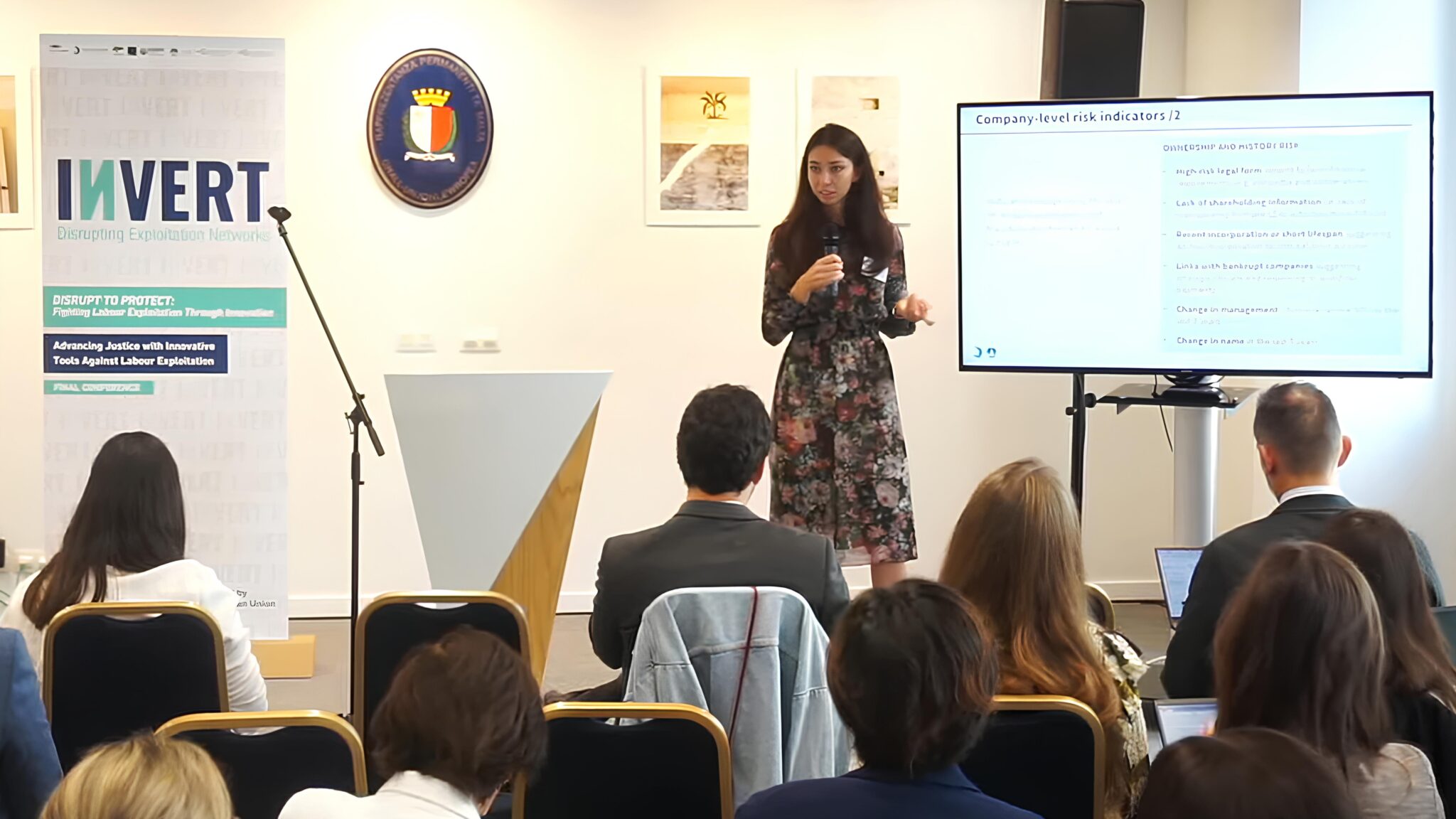
Outcomes from INVERT: A Risk-Based Tool Against Labour Exploitation
Labour exploitation has emerged as predominant purpose of human trafficking in Europe. A recent report from the European Commission revealed that the proportion of victims of human trafficking subjected to labour exploitation doubled between 2008 and 2023, now exceeding 40% of identified cases. During a recent meeting organised by…

Professor Ernesto Ugo Savona Receives 2025 ESC Criminology Award
Today, our Director, Professor Ernesto Ugo Savona, was awarded the 2025 ESC European Criminology Award. Announced at the 25th annual conference of the European Society of Criminology in Athens, the award recognised his lifetime contribution to the field. This prestigious tribute acknowledged his achievements over his 55-year academic career, his…