Webinar – Assessing Financial Crime Risk factors in firms’ Ownership Structure: Results of project DATACROS
Criminal organizations increasingly adopt legal companies and complex cross-border ownership structures to cover their illicit activities, and to conceal the laundering of corruption proceeds. Project DATACROS, co-funded by the European Commission, DG Home Affairs (ISF Police 2017-AG-CORRUPT-823792), and coordinated by Transcrime, has developed the DATACROS tool, a prototype platform which can support financial crime investigations and risk assessment by detecting anomalies in firms’ ownership structure that can flag high risks of collusion, corruption and money laundering. This tool has been recently presented and discussed at meetings with national and international networks of law enforcement agencies and anti-corruption authorities. This webinar will provide a unique opportunity to:
- Present the key findings from the project, and the results of the analysis on corporate ownership anomalies across European regions and sectors;
- Demonstrate the DATACROS tool for assessing risk of corruption or other financial crimes;
- Discuss with Practitioners how this tool could be useful for financial crime investigations and risk assessment.
Speakers:
Ernesto Ugo Savona – Transcrime, Università Cattolica del Sacro Cuore
Floriana Sipala – European Commission, DG HOME
Hanne Juncher – Council of Europe
Frédéric Pierson – Europol
Antonio Bosisio – Transcrime, Università Cattolica del Sacro Cuore
Izadora Zubek – Agence Française Anticorruption (AFA)
Daniel Vasquez Llorens – Cuerpo Nacional de Policia (CNP)
Filippo Romano – Autorità Nazionale Anticorruzione (ANAC)
Lorenzo Bagnoli – Investigative Reporting Project Italy (IRPI)
Moderator: Michele Riccardi – Transcrime, Università Cattolica del Sacro Cuore
WHEN: Wednesday, February 24th 2021 – 10:30 – 12:00 CET
Click here to learn more.
Click here to register.

Latest news
View all news
DATACROS III International Conference
12 November 2026 9.30 – 17:00 EET (8.30 – 16:00 CET) Bucharest and Online Like any modern enterprise, criminal organisations have proved highly responsive to emerging opportunities: exploiting technologies such as AI and crypto to reduce costs, scale operations and launder proceeds; targeting new markets,…
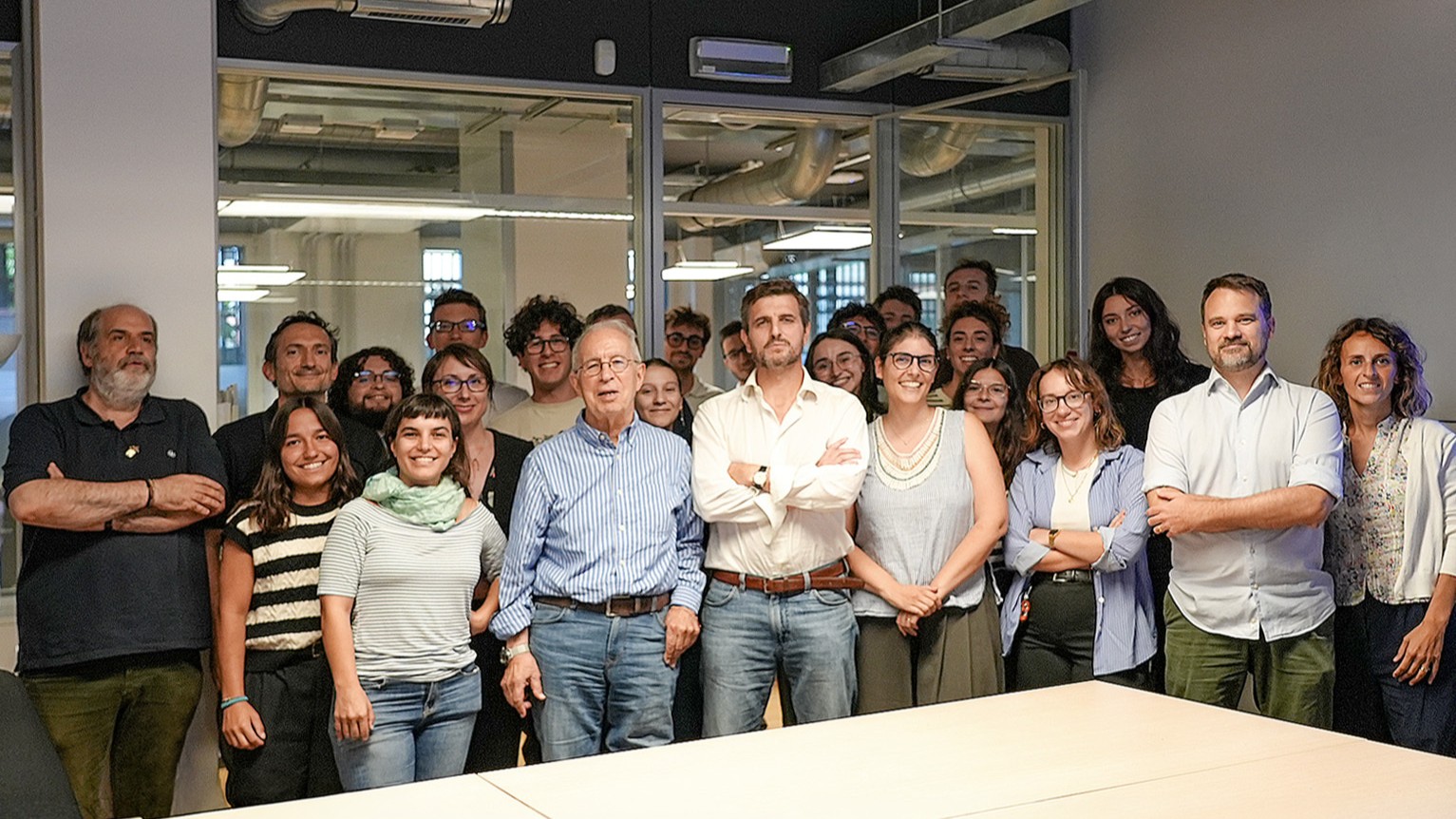
Governance transition at Transcrime, marked by continuity and international growth
On Tuesday 22 September 2026, the Executive Board of Transcrime – Joint research centre on innovation and crime of Università Cattolica del Sacro Cuore, Alma Mater Studiorum University of Bologna and Università di Perugia – elected Prof. Michele Riccardi as the Centre’s new Director. The outgoing Director, Prof. Ernesto U.

#TranscrimeFiles | The new architecture of labour exploitation
Global supply chains and inadequate migration policies have created new vulnerabilities for the fastest-growing, yet least-studied driver of human trafficking: labor exploitation. Its new and complex architecture exploits layered networks of seemingly legitimate firms to evade scrutiny, presenting severe challenges to traditional law enforcement. Within the EU-funded projects VANGUARD…

Transcrime agenda at the XXVI ESC Annual Conference
Frontiers of Criminology 9-12 September 2026 – Warsaw, Poland At the Eurocrim 2026 Conference, Transcrime researchers will present more than twenty recent studies in which we investigated markets’ vulnerabilities to criminal infiltration, organised crime structures and modi operandi, and risks to…

#TranscrimeFiles | A case of EU funds fraud unmasked through the Risk Visioner tool
Watch how a real EU funds fraud, engineered to withstand scrutiny, was exposed through data-driven risk assessment, network analysis and AI screening modules run end-to-end within our tool Risk Visioner – developed by Transcrime and Crime&tech within the EU-funded project DATACROS III.

EJCPR ranked 9th worldwide in the field of criminology
The European Journal on Criminal Policy and Research (EJCPR) has been ranked 9th worldwide in the Criminology & Penology category of the latest Journal Citation Reports (JCR), one of the leading international rankings of academic journals. This places the EJCPR in the first quartile (Q1), recognising it among the…