New project EXTRA: the first EU observatory on external threats from organised crime
The evolution of criminal networks operating beyond European borders presents a strategic challenge to the EU’s values and internal market, generating illicit proceeds estimated at over 1% of the EU’s GDP (2019). These threats often arise from weak regulatory environments with limited corporate ownership transparency, exploiting poorly monitored digital spaces, emerging technologies – including artificial intelligence – and shell corporate structures to penetrate the licit economy, move capital, and conceal illegal activities.
To address these developments, the European Commission has allocated more than EUR 6 million to project EXTRA – External Threat Assessment of Organised Crime to the European Union: the first European observatory dedicated to global criminal threats affecting the EU. Over the next three years, Transcrime will cooperate with Global Initiative Against Transnational Organized Crime (GI-TOC) and INTERPOL to develop a new intelligence framework on the main threats, actors and schemes, the networks in which they operate, and market vulnerabilities, before these evolve into operational crises.
The analyses will feed into an annual report serving as a reference to inform EU decision-making on external security and relations with third countries, complementing Europol’s SOCTA, which focuses instead on internal threats.
Specifically, Transcrime will contribute its analytical capabilities and advanced technologies for assessing risks of infiltration into the licit economy, applying risk indicators and AI-driven models developed and validated in European projects such as DATACROS III, KLEPTOTRACE, FALCON and INVERT, already employed by authorities and law-enforcement agencies in investigations into organised and financial crime, corruption, sanctions evasion, and labour exploitation. The analysis will map economic, financial, and regulatory vulnerabilities facilitating infiltration of the licit economy, anomalous trade flows, opaque ownership links between companies, and investments by organised crime groups – European and non-European – in key sectors of the EU market.
An Advisory Panel comprising experts from international bodies such as the European Commission, Europol, Eurojust, Frontex and UNODC will ensure methodological robustness and alignment with EMPACT priorities – the EU initiative fostering cooperation among Member States, authorities, and partners against criminal threats. In addition to the annual report, EXTRA will produce thematic analyses, new datasets, confidential briefings for competent authorities, and capacity-building activities for third countries.

Latest news
View all news
A new phase for the European Journal on Criminal Policy and Research
By Professor Ernesto U. Savona In times of fragmented politics and converging criminal threats, the idea of “Europe” must be reimagined not only in political and legal terms but also in cultural ones. Criminology, as the discipline devoted to understanding crime, justice, and security, cannot remain confined within national…

Why do some countries become drug trafficking hubs – and others don’t?
Phillip Screen, a researcher at Transcrime, completed his International Ph.D. in Criminology at the Università Cattolica del Sacro Cuore in February 2026. In this blog post, he presents the main findings of his doctoral thesis: “Why some and not others? Challenging traditional narratives in understanding…

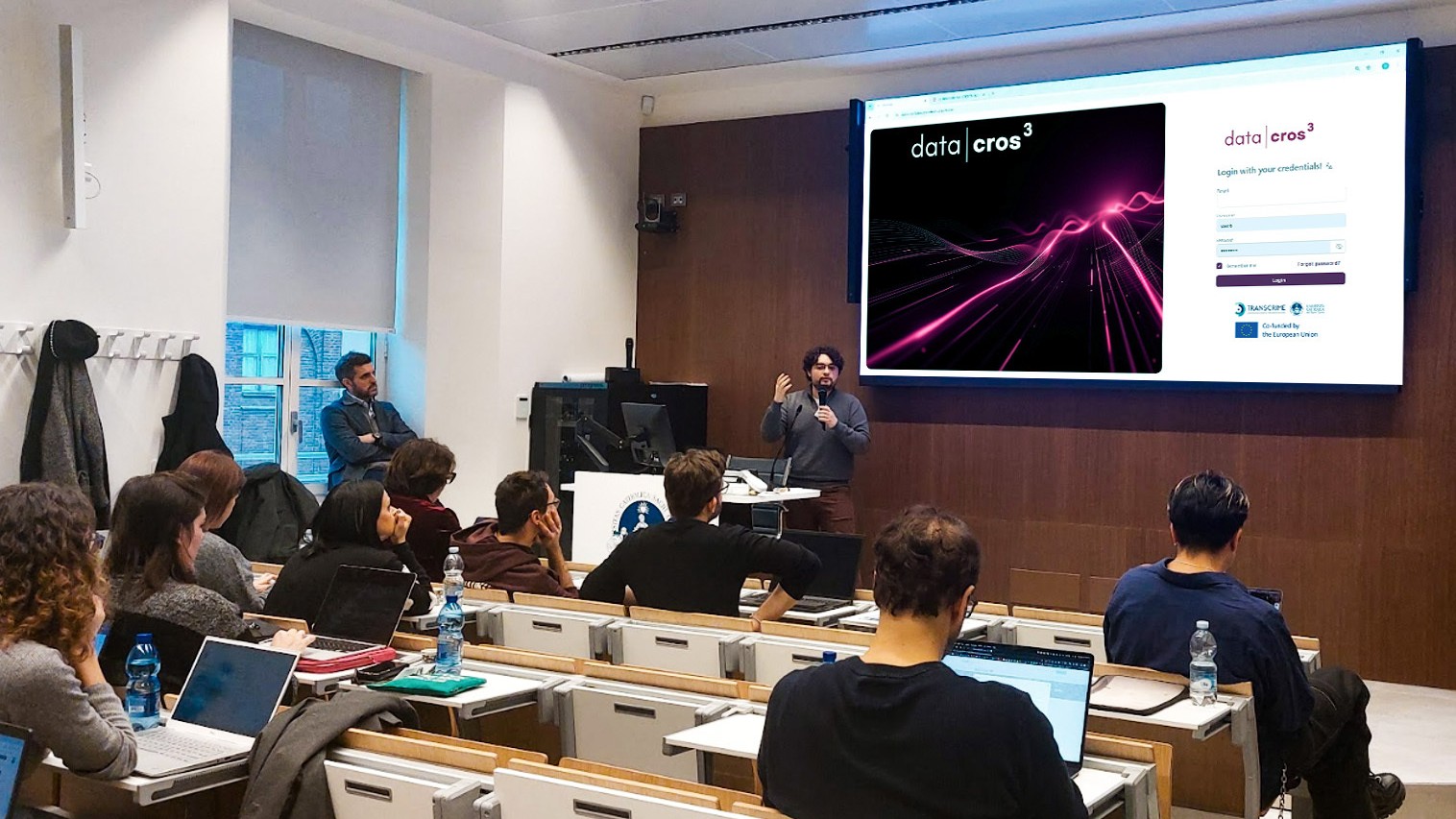
Discover and Expose – 2nd DATACROS III Training
“Sources, tools and techniques for journalism and civic oversight” 8 April 2026 | 10.00 – 16.00 CET Online, via Webex Society’s issues call for societal action. That’s why investigative journalists and civil society organisations are often first responders in the fight against organised and financial crime. With…
NEXT-IJ Investigathon: technologies and AI for investigative journalism
The effectiveness of investigative journalism is a barometer of a healthy democracy, strengthening transparency around power and economic interests. Yet, to trace connections and document facts, journalists increasingly need new skills and tools to unravel complex, transnational criminal patterns. To support them in this challenge, the Università Cattolica hosted the three-day…

TENACITy: a new report and tools to investigate the abuse of transport systems
The new report “Preventing the misuse of commercial aviation: Using passenger data to identify high-risk passengers and emerging threats” provides a high-level overview of the research activities carried out by Transcrime within the Horizon Europe-funded project TENACITy (Travelling Intelligence Against Crime…

A conference in Italian on integrity measures in a major public project
A conference in Italian will be held on 3 December 2025 at Università Cattolica (Milan) to present the first empirical study in Italy on integrity controls in a major infrastructure project: the construction of Milan’s Blue Metro Line. Conducted by Transcrime, its spin-off Crime&tech, and Metro4…