New year, new challenges, new logo. Message from the Director
Transcrime was established in 1994 as a Joint Research Centre on Transnational Crime, anticipating scholars, practitioners and policy makers on this issue. Six years later, the signature of the United Nations Convention on Transnational Organised Crime consolidated the past successful experiences of combatting transnational crime and opened the way for modernised actions against crime worldwide. For 29 years, Transcrime has contributed influencing research, operations, and policies at different levels in this domain.
29 years ago, understanding and counteracting transnational crime was a challenge; today, it is a consolidated area among scholars and practitioners which has already produced a variety of studies, policies and has built a large awareness. Today, there are other challenges and this requires Transcrime to update its objectives while maintaining the same pioneering vision of its origins.
“Innovation and crime” is a combination that defines our new objectives. It connects our past initiatives and a new systematic vision for future activities, where we will invest in producing innovative approaches to reduce crime.
Innovation means understanding and explaining, through reliable data, if the changes in crime produced by the pandemic will be episodic or stable. Innovation means understanding and explaining the different forms of crime concentration, either spatial or temporal. Innovation means understanding and explaining how the changes in violence and opportunities are impacting the landscape of actors, modi operandi, sectors, and related risks. And, more than others, innovation means exploring the changes of organised, economic and financial crimes, and in illicit markets, where technology plays an essential role.
To implement this vision, we need more data, more cooperation with law enforcement and judicial authorities, international organisations, national and international policy makers and enhanced cooperation with technology providers and data analytics companies. This is not something new to us. Our portfolio of international and national projects and partnerships shows that we have analysed the relationship between innovation and crime across different topics and methodologies. Our ambition is to push even further in this direction.
“Innovation and crime” connects our past to our vision of the future. We are grateful to the many people who contributed to Transcrime’s achievements, and we are looking forward to working with those who share this vision with us.
Latest news
View all news
DATACROS III International Conference
12 November 2026 9.30 – 17:00 EET (8.30 – 16:00 CET) Bucharest and Online Like any modern enterprise, criminal organisations have proved highly responsive to emerging opportunities: exploiting technologies such as AI and crypto to reduce costs, scale operations and launder proceeds; targeting new markets,…
Governance transition at Transcrime, marked by continuity and international growth
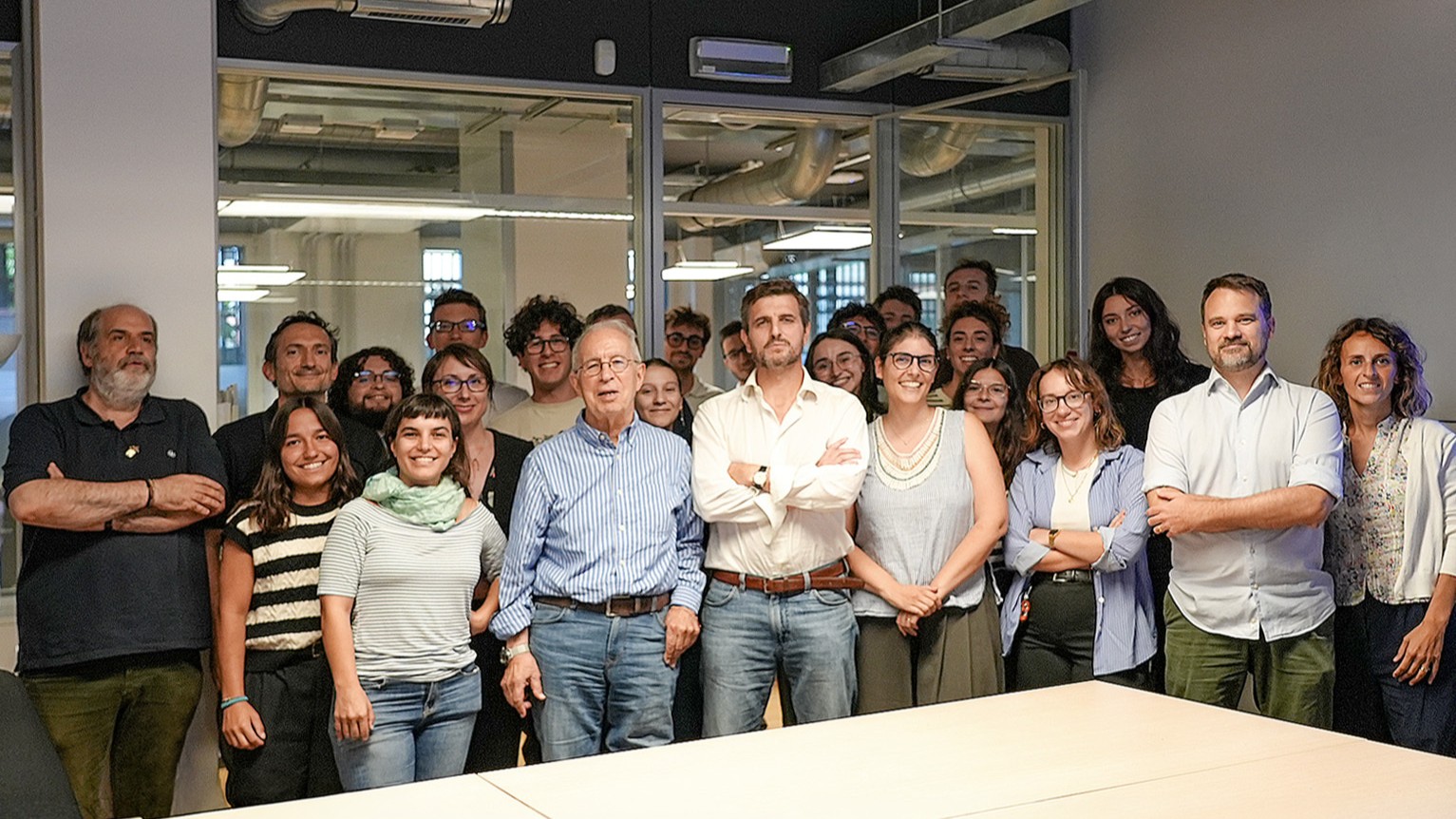
On Tuesday 22 September 2026, the Executive Board of Transcrime – Joint research centre on innovation and crime of Università Cattolica del Sacro Cuore, Alma Mater Studiorum University of Bologna and Università di Perugia – elected Prof. Michele Riccardi as the Centre’s new Director. The outgoing Director, Prof. Ernesto U.

#TranscrimeFiles | The new architecture of labour exploitation
Global supply chains and inadequate migration policies have created new vulnerabilities for the fastest-growing, yet least-studied driver of human trafficking: labor exploitation. Its new and complex architecture exploits layered networks of seemingly legitimate firms to evade scrutiny, presenting severe challenges to traditional law enforcement. Within the EU-funded projects VANGUARD…

Transcrime agenda at the XXVI ESC Annual Conference
Frontiers of Criminology 9-12 September 2026 – Warsaw, Poland At the Eurocrim 2026 Conference, Transcrime researchers will present more than twenty recent studies in which we investigated markets’ vulnerabilities to criminal infiltration, organised crime structures and modi operandi, and risks to…

#TranscrimeFiles | A case of EU funds fraud unmasked through the Risk Visioner tool
Watch how a real EU funds fraud, engineered to withstand scrutiny, was exposed through data-driven risk assessment, network analysis and AI screening modules run end-to-end within our tool Risk Visioner – developed by Transcrime and Crime&tech within the EU-funded project DATACROS III.

EJCPR ranked 9th worldwide in the field of criminology
The European Journal on Criminal Policy and Research (EJCPR) has been ranked 9th worldwide in the Criminology & Penology category of the latest Journal Citation Reports (JCR), one of the leading international rankings of academic journals. This places the EJCPR in the first quartile (Q1), recognising it among the…